
![Bookstack (swarm)]() Bookstack (swarm)
Bookstack (swarm)
Bookstack is a free and open source Wiki designed for creating beautiful documentation. Feautring a simple, but powerful WYSIWYG editor it allows for teams to create detailed and useful documentation with ease.
Configuration
TypeSwarmlinuxPUID=1000PGID=100TZ=''DATABASE_PASSWORD=''MYSQL_ROOT_PASSWORD=''PORT=''Template by mikestraney·Source
Report issueNotes
Install on Portainer
Import all app templates into your Portainer instance, for easy 1-click deploys
- Ensure both Docker and Portainer are installed, and up-to-date
- Log into your Portainer web UI
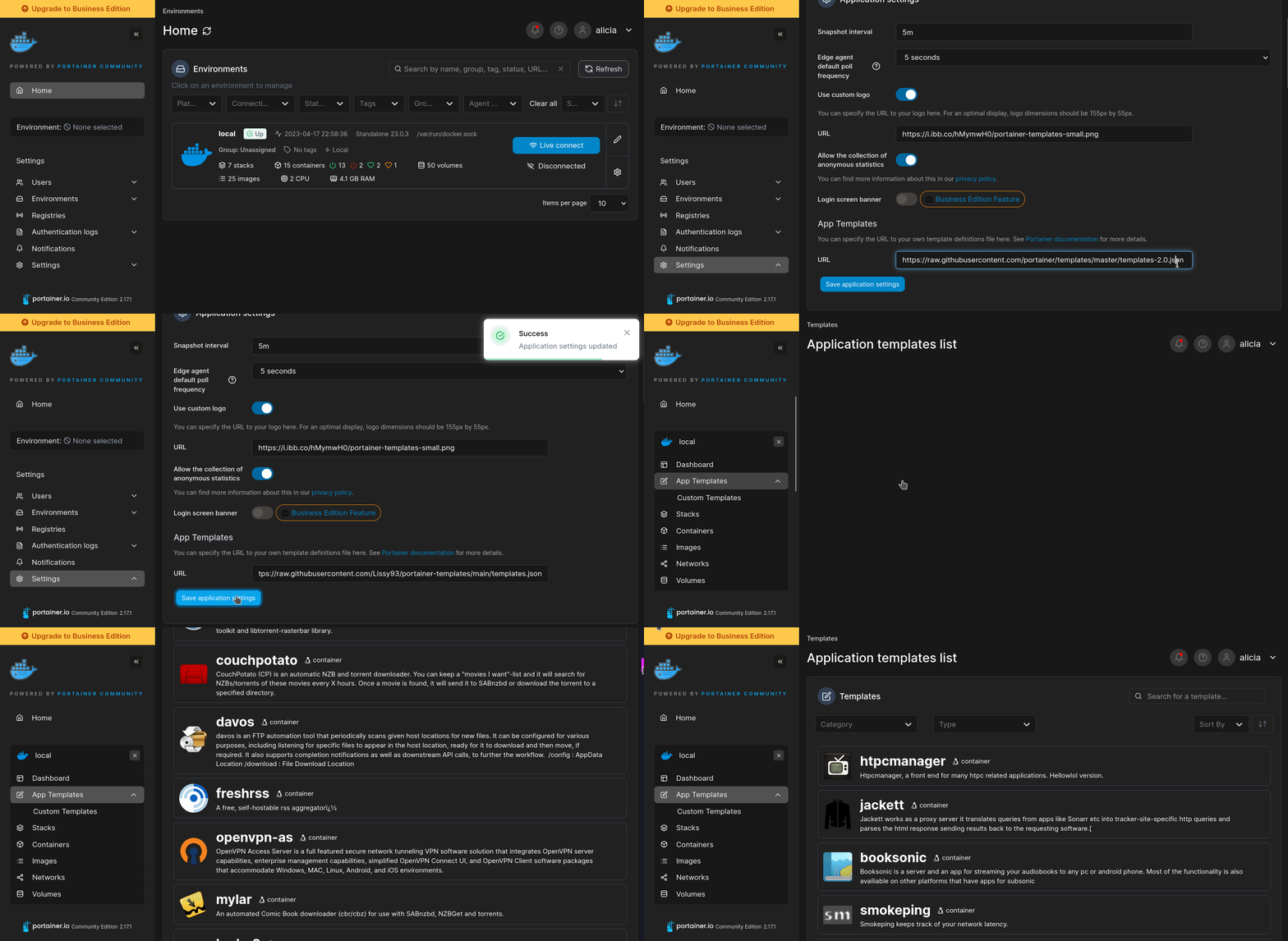
- Under Settings → App Templates, paste the below URL
- Head to Home → App Templates, and the list of apps will show up
- Select Bookstack (swarm), fill in any config options, and hit Deploy
Template Import URL
https://raw.githubusercontent.com/Lissy93/portainer-templates/main/templates.json
Show Me
More install options in our documentation.
Check the logs first
Nine times out of ten the logs tell you exactly what went wrong.
- In Portainer, go to Containers, click the container, then Logs. Or run
docker logs <container> - Exit codes help too:
137means killed, usually out of memory.126or127means the command inside the image is broken.
Required settings are blank
TZ, DATABASE_PASSWORD, MYSQL_ROOT_PASSWORD, PORT have no default value, and the app may crash or misbehave if left empty.
- Fill them in on the deploy screen before hitting deploy.
Stack won't deploy
Compose stacks fail fast on small mistakes, and Portainer shows the reason just above the editor.
- YAML only accepts spaces for indentation, a single tab breaks the whole file.
Raise an issue
Found something which isn't working as it should? Here's how to report it.
- Bug within the app: Open an issue within the app's repo
- Template not working: Open an issue on mikestraney/portainer-templates
- This website not working: Open an issue on lissy93/portainer-templates
A Swarm stack
Bookstack (swarm) is a Swarm stack. Swarm is Docker's own way of running apps across more than one machine, so Portainer can spread it over a cluster and move it elsewhere if a server drops out.
Environment variables
Environment variables are the settings you hand over when you deploy, things like a password or a timezone. Bookstack (swarm) takes 6 of them, and 4 need a value before it'll start properly:
PUID, defaults to1000PGID, defaults to100TZ, needs a valueDATABASE_PASSWORD, needs a valueMYSQL_ROOT_PASSWORD, needs a valuePORT, needs a value
Users and permissions
The PUID and PGID settings tell it which user and group to act as on your host. Point them at your own account (find yours with id $USER) so the files it writes into your mounted folders come out owned by you rather than root.
Networking
Nothing custom is set, so Bookstack (swarm) sits on Docker's default bridge network: its own private space that reaches the outside world only through the ports it publishes.
Platform
The platform is linux, the kind of system the container is built to run on. Docker and Portainer handle this on a normal Linux server.
Portainer app templates
Zooming out, this whole page comes from a Portainer app template: a short recipe telling Portainer how to set Bookstack (swarm) up. Add the template list to Portainer once, then deploying Bookstack (swarm) is a click rather than a wall of config.