
Marreta
Stack
Marreta is a tool that breaks down access barriers and elements that hinder reading!
Image details
Source details
Configuration
TypeComposelinuxghcr.io/manualdousuario/marreta:latest1180:80SITE_NAME=SITE_DESCRIPTION=SITE_URL=LANGUAGE=Standalone Install
Select an install method, to see config/commands for deploying Marreta
Install on Portainer
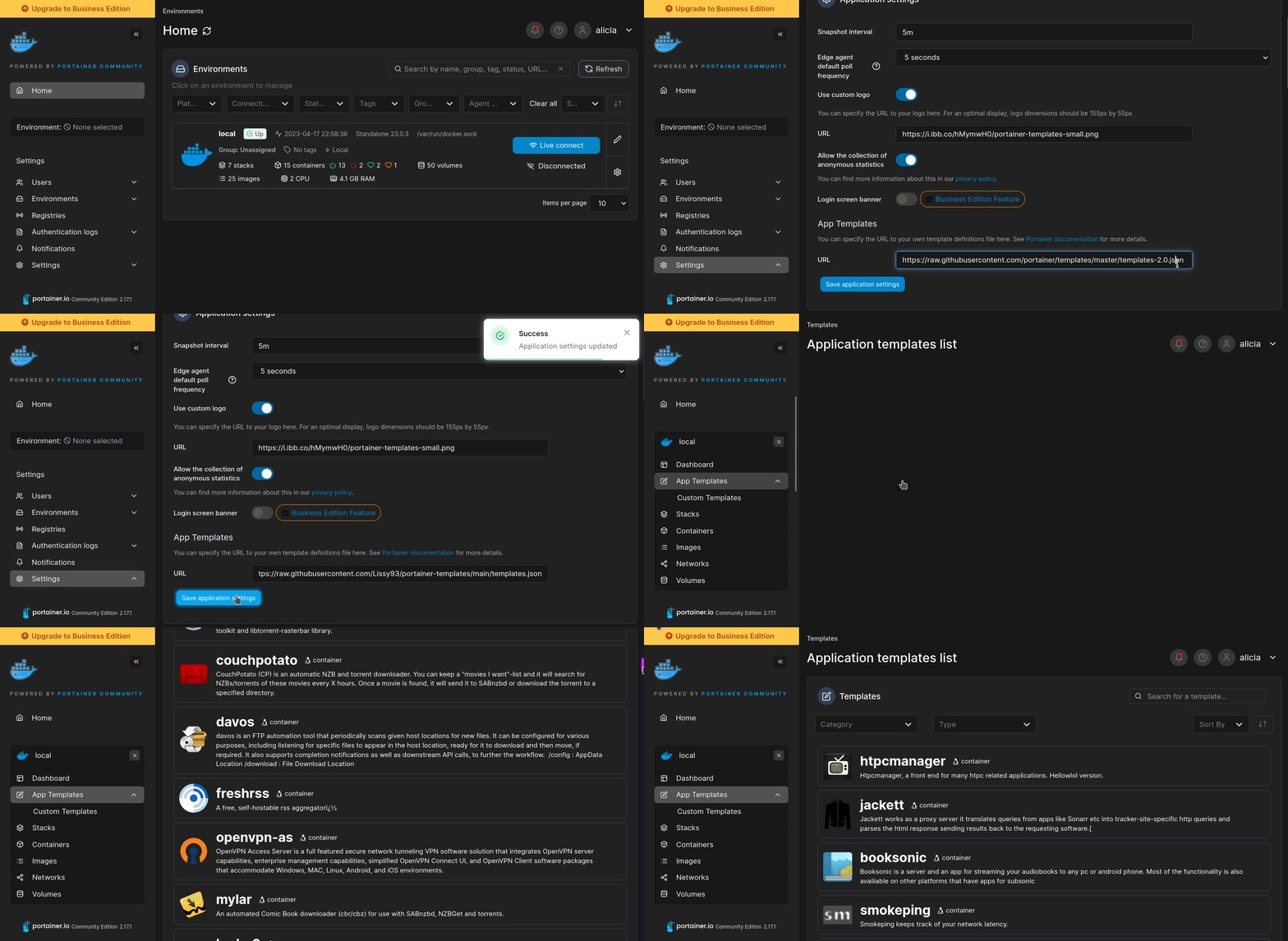
Import all app templates into your Portainer instance, for easy 1-click deploys
- Ensure both Docker and Portainer are installed, and up-to-date
- Log into your Portainer web UI
- Under Settings → App Templates, paste the below URL
- Head to Home → App Templates, and the list of apps will show up
- Select Marreta, fill in any config options, and hit Deploy
Template Import URL
https://raw.githubusercontent.com/Lissy93/portainer-templates/main/templates.json
Show Me
Original stackfile
The compose file this template deploys, straight from its repo:
services:
  marreta:
    container_name: marreta
    image: ghcr.io/manualdousuario/marreta:latest
    ports:
      - "1180:80"
    environment:
      - SITE_NAME=
      - SITE_DESCRIPTION=
      - SITE_URL=
      - LANGUAGE=
Or deploy it directly from the source:
git clone https://github.com/xneo1/portainer_templates
cd portainer_templates
docker compose -f Template/Stack/marreta.yml up -d
More install options in our documentation, or see manualdousuario/marreta for app-specific guidance.
🛠️ Marreta


Marreta é uma ferramenta que quebra barreiras de acesso e elementos que atrapalham a leitura!

Instancia publica em marreta.link!
✨ O que tem de legal?
- Limpa e corrige URLs automaticamente
- Remove parâmetros chatos de rastreamento
- Força HTTPS pra manter tudo seguro
- Deixa o HTML limpinho e otimizado
- Conserta URLs relativas sozinho
- Permite colocar seus próprios estilos e scripts
- Remove elementos indesejados
- Cache, cache!
- Bloqueia domínios que você não quer
- Proteção DMCA com mensagens personalizadas
- Permite configurar headers e cookies do seu jeito
- PHP-FPM e OPcache
- Suporte a Proxy
🐳 Instalando em Docker
Instale Docker e Docker Composecurl -o ./compose.yml https://raw.githubusercontent.com/manualdousuario/marreta/main/compose.ymlAgora modifique com suas preferencias:
nano compose.ymlAPP_NAME: Nome do seu MarretaAPP_DESCRIPTION: Conta pra que serveAPP_URL: Onde vai rodar, endereço completo comhttps://. O container serve HTTP na porta8080e o compose.yml publica ela em81no host; se você mudar isso (ex:8080:8080), inclua a porta também no APPURL (ex: https://seusite:8080)APP_LOCALE: pt-br (Português Brasil), en (Inglês), es (Espanhol) ou de-de (Alemão), ru-ru (Russo)APP_KEY: opcional. Se ficar vazio, uma chave é gerada no primeiro boot e guardada no volumeDISABLE_CACHE: opcional. O cache de páginas vem ligado por padrão; coloquetruepara desligarADMIN_EMAIL: admin@marreta.localADMIN_PASSWORD: password
Agora só rodar
docker compose up -d⚠️ Breaking changes: migrando da 2.x pra 3.x
A partir da 3.0.0 o Marreta virou uma aplicação Laravel. É uma reescrita completa do zero, então não existe caminho de upgrade "no lugar", o recomendado é subir os containers novos e reconfigurar o essencial.O que mudou
Variáveis de ambiente
| Antes (2.x) | Agora (3.x) | Observação |
|---|---|---|
SITENAME | APPNAME | |
SITEDESCRIPTION | APPDESCRIPTION | |
SITEURL | APPURL | |
LANGUAGE | APPLOCALE | |
DEBUG | APPDEBUG | |
| — | APPKEY | Novo e obrigatório. Se deixar vazio, é gerada uma chave automaticamente no primeiro boot |
SELENIUMHOST | BROWSERWSENDPOINT | Agora aponta pro Lightpanda (ws://marretabrowser:9222), não mais pro Selenium |
DNSSERVERS | (removido) | |
CLEANUPDAYS | (removido) | |
LOGLEVEL / LOGDAYSTOKEEP | (removido) | |
S3CACHEENABLED / S3 | (removido) | |
| — | ADMINEMAIL / ADMINPASSWORD | Novo. Credenciais de login do painel /admin |
Docker
- Porta interna do container mudou de
80pra8080(ocompose.ymljá publica em81:8080no host, ajuste se você tinha80:80mapeado). - Os bind mounts antigos (
./app/cachee./app/logs) deixaram de existir. Agora tudo (banco SQLite + cache) mora num volume nomeado,marreta_storage, montado em/var/www/html/storage/app.
Passo a passo pra migrar
- Antes de derrubar os containers antigos, anote as customizações que você tenha feito em
app/data/domain_rules.php,app/data/blocked_domains.phpeapp/data/global_rules.php, e também os domínios cadastrados emapp/cache/dmca_domains.json. Nada disso é migrado automaticamente. - Baixe o novo
compose.yml,APP_KEY(gere uma em laravel-encryption-key-generator.vercel.app),ADMIN_EMAILeADMIN_PASSWORD. - Suba os containers com
docker compose up -d. No primeiro boot, as migrations rodam e o banco é populado com o conjunto padrão de regras/domínios bloqueados que vêm com o Marreta. - Acesse
SEU_DOMINIO/admin, entre comADMIN_EMAIL/ADMIN_PASSWORDe recadastre manualmente: suas regras de domínio customizadas, domínios bloqueados extras e domínios com DMCA que você tinha anotado no passo 1.
🚀 Integrações
- 🤖 Telegram: Bot oficial
- 🦊 Firefox: Extensão por Clarissa Mendes - Baixar | Código fonte
- 🌀 Chrome: Extensão por Clarissa Mendes - Baixar | Código fonte
- 🦋 Bluesky: Bot por Joselito - Perfil | Código fonte
- 🍎 Apple: Integração ao Atalhos
Feito com ❤️! Se tiver dúvidas ou sugestões, abre uma issue que a gente ajuda! 😉
Agradecimento ao projeto Burlesco e Hover que serviu de base para varias regras!
Star History
Serve Marreta on your own domain behind Caddy, Nginx or Traefik. Fill in your domain and copy the result. It's a starting point, some apps need their own base URL or extra headers set too.
Proxying marreta.example.com to http://marreta:80
Add this to your Caddyfile
marreta.example.com {
	reverse_proxy http://marreta:80
}Check the logs first
Nine times out of ten the logs tell you exactly what went wrong.
- In Portainer, go to Containers, click the container, then Logs. Or run
docker logs <container> - Exit codes help too:
137means killed, usually out of memory.126or127means the command inside the image is broken.
Port already in use
If deployment fails with "Bind for 0.0.0.0:1180 failed: port is already allocated", something else on your server is using that port.
- Find what's using it:
sudo ss -tlnp | grep :1180 - Stop the other service, or pick a different host port. In
1180:80only the left number is yours to change, the right one belongs to the app.
Running but the page won't load
The container is up but nothing appears in your browser.
- Use your server's real IP:
http://your-server-ip:1180. The 0.0.0.0 link Portainer shows isn't a real address. - Give it a minute after first deploy, marreta can take a while to initialise.
- Make sure your firewall allows the port, e.g.
sudo ufw allow 1180
Image won't pull
Test the pull directly on the host: docker pull ghcr.io/manualdousuario/marreta:latest
- "manifest unknown" means the tag no longer exists. This template uses
latest, so try pinning a specific version instead. - "toomanyrequests" is the Docker Hub rate limit. Log in with
docker loginto raise it. - "no space left on device" means a full disk. Reclaim space with
docker system prune
"exec format error"
This means the image was built for a different CPU architecture than your server.
- This image supports:
amd64, arm64 - Check yours with
uname -m: x86_64 is amd64, aarch64 is arm64. Raspberry Pi and other ARM boards are the usual culprits.
Required settings are blank
SITE_NAME, SITE_DESCRIPTION, SITE_URL, LANGUAGE have no default value, and marreta may crash or misbehave if left empty.
- Fill them in on the deploy screen before hitting deploy.
Stack won't deploy
Compose stacks fail fast on small mistakes, and Portainer shows the reason just above the editor.
- YAML only accepts spaces for indentation, a single tab breaks the whole file.
Raise an issue
Found something which isn't working as it should? Here's how to report it.
- Bug within the app: Open an issue on manualdousuario/marreta
- Template not working: Open an issue on xneo1/portainer_templates
- This website not working: Open an issue on lissy93/portainer-templates
A Compose stack
Marreta is a Compose stack, a set of containers defined in one file and brought up together by Portainer, then started and stopped as a single app.
The app image
An image is the app packed up ready to go, everything Marreta needs bundled into one download. This template pulls ghcr.io/manualdousuario/marreta:latest, which Docker fetches once (about 231 MB) and then starts your own copy from.
Where the image comes from
Docker pulls its images from registries, public libraries of ready-built apps. Marreta's comes from the GitHub Container Registry, published by manualdousuario.
Version tags
The bit after the colon in the image name is the version tag. Here it's latest, which always points at the newest build, so a redeploy can bump you to a newer release without you asking. Pin a specific tag if you would rather stay on one version.
Which machines it runs on
Every image is built for particular CPU types. This one ships for amd64, arm64, so it runs on both regular x86 servers and ARM boards like a Raspberry Pi.
Ports
A port is the door the app answers on. A mapping like 1180:80 means it's reachable on port 1180 of your server, where the left number is yours to change and the right one belongs to the app. Once it's running, open http://your-server-ip:1180 in a browser. It opens:
1180:80, likely the web interface
No stored data
This template doesn't mount any storage, so whatever Marreta writes stays inside the container and is wiped if it's recreated or updated. That's fine for something stateless, but add a volume before trusting it with anything you want to keep.
Environment variables
Environment variables are the settings you hand over when you deploy, things like a password or a timezone. Marreta takes 4 of them, and 4 need a value before it'll start properly:
SITE_NAME, needs a valueSITE_DESCRIPTION, needs a valueSITE_URL, needs a valueLANGUAGE, needs a value
Networking
Nothing custom is set, so Marreta sits on Docker's default bridge network: its own private space that reaches the outside world only through the ports it publishes.
Container name
Once it's deployed, Portainer names the container marreta. That's what you'll spot in the containers list and use in commands like docker logs marreta.
Platform
The platform is linux, the kind of system the container is built to run on. Docker and Portainer handle this on a normal Linux server.
Open source license
Marreta is open source, released under the GPL-3.0 license. In plain terms the code is out in the open, so you're free to run it and change it to fit what you need.
Portainer app templates
Zooming out, this whole page comes from a Portainer app template: a short recipe telling Portainer how to set Marreta up. Add the template list to Portainer once, then deploying Marreta is a click rather than a wall of config.